
A New Home for Ideas: the Kusuma Trust Conference Suite
16 October 2026 | NEWS
14 July 2025
Researchers from the University of Gibraltar’s Centre of Excellence in Responsible Gaming, together with international collaborators, participated in two major international events addressing youth mental health and behavioural addictions: a high-level expert workshop in Paris, France organised by the Pompidou Group and the International Conference on Behavioural Addictions (ICBA) 2025 in Nantes, France.These events showcased groundbreaking work on online gambling, video gaming, digital media use, adolescent health, and addiction policy, reinforcing the team’s global reputation for impactful, real-world research.

Before ICBA 2025, Dr Andrea Czakó, Dr Shu (Mogu) Yu, Prof Zsolt Demetrovics and Dr Orsolya Király participated in the international workshop “Promoting the Mental Health of Children and Youth by Addressing the Risks of Online Gambling and Gaming”, held in Paris, 3–5 July 2025.
Gathering experts from 28 countries, the workshop focused on identifying, classifying, and evaluating promising interventions to prevent and reduce mental health risks linked to online gambling and gaming among young people.
Over three days, participants developed comprehensive methodologies and frameworks for prevention, harm-reduction, and treatment programmes, creating a shared toolbox of good practices. This initiative, co-funded by the European Union and implemented by the Council of Europe, will help guide EU member states and international policymakers in addressing internet-use-related addictive behaviours among youth.

Immediately following the Paris workshop, the Centre of Excellence in Responsible Gaming team presented an impressive series of studies at ICBA 2025 (7–9 July 2025).
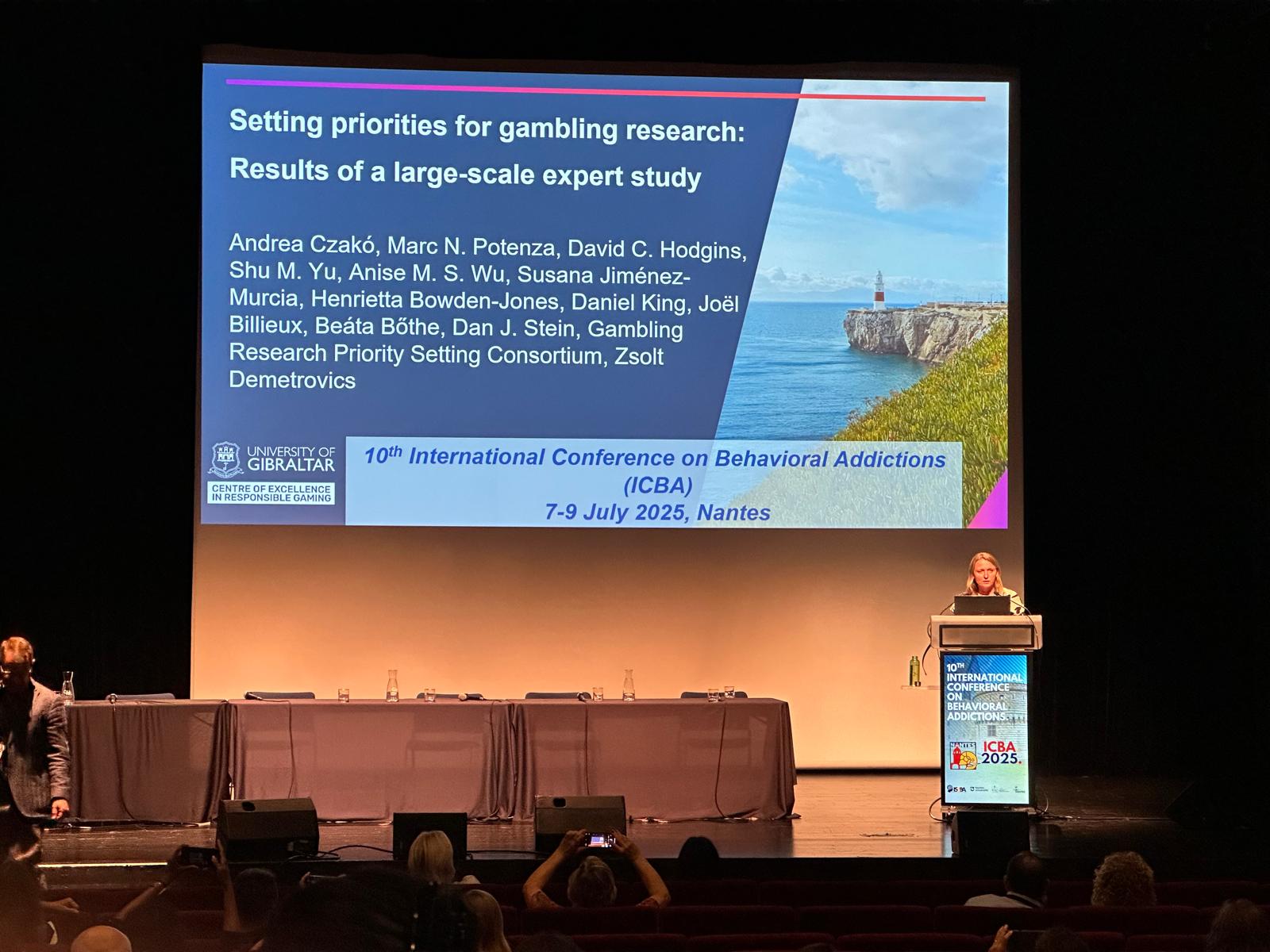
Setting Priorities for Gambling Research: Results of a Large-Scale Expert Study
Presenter: Dr Andrea Czakó
Dr Czakó also presented results from a global expert study involving 307 researchers from 35 countries, establishing the top 25 research priorities in gambling. Topics highlighted include youth vulnerability, the convergence of gaming and gambling, advertising, and treatment access, offering a strategic guide for future research and policy.
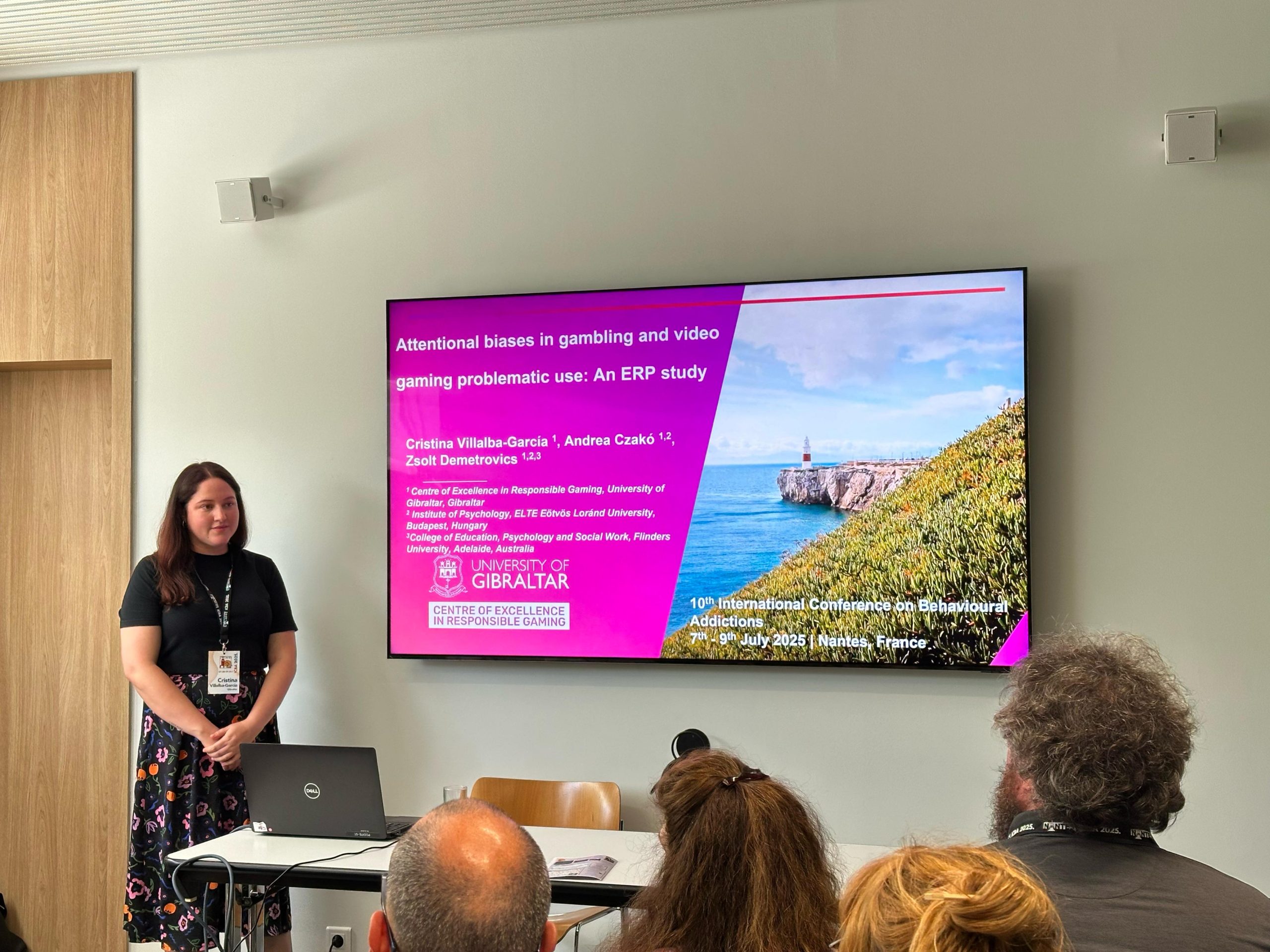
Attentional Biases in Gambling and Video Gaming Problematic Use: An ERP Study
Presenter: Dr Cristina Villalba-García
Dr Villalba-García explored attentional biases in gambling and problematic gaming (including loot boxes) using behavioural tasks, self-reports, and EEG. This research advances understanding of the cognitive mechanisms driving behavioural addictions and may inform cognitive-based interventions.
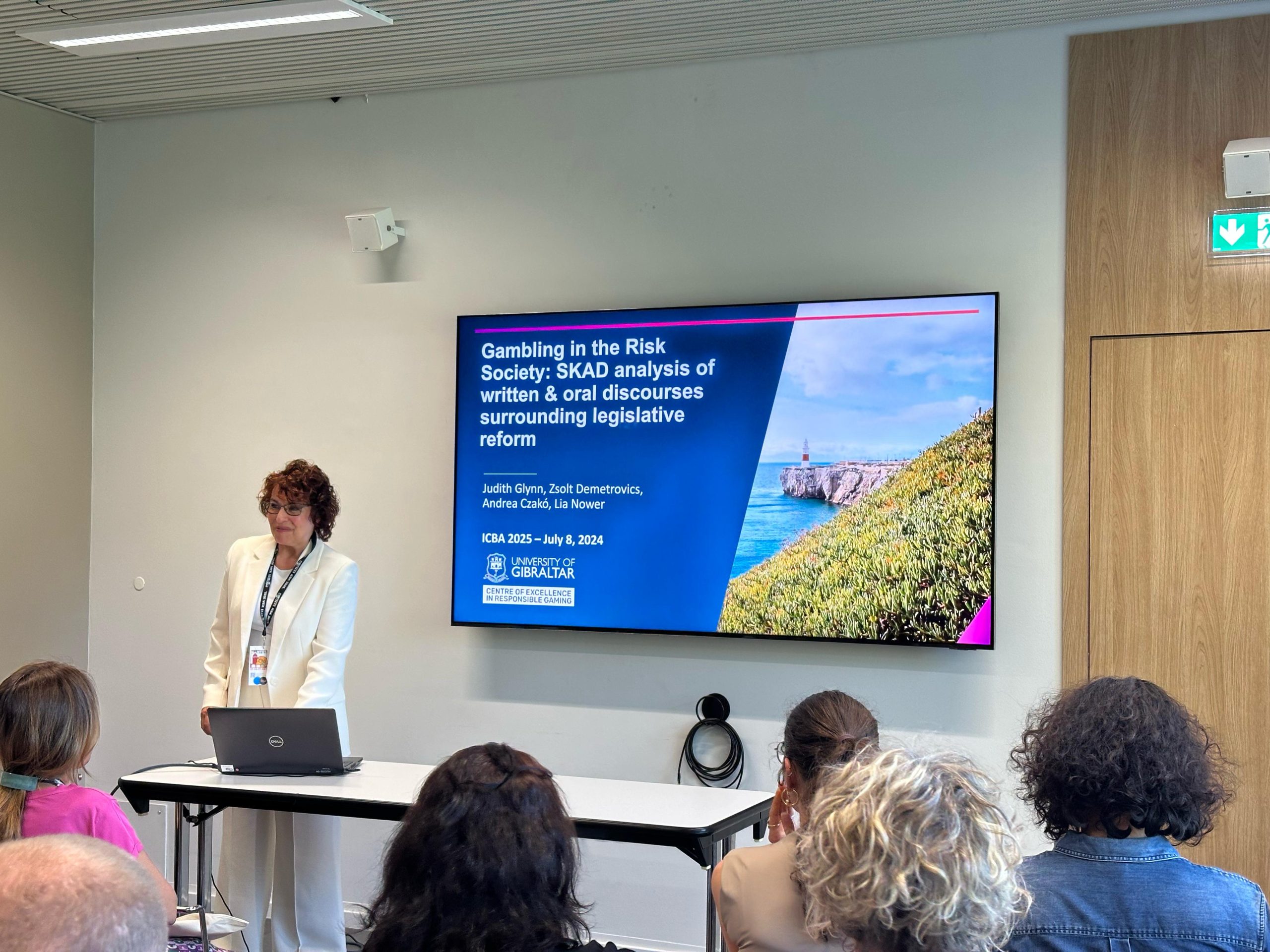
Reputation, Macroeconomic Benefit, and Fair Share: SKAD Analysis of the Discourse Surrounding Gibraltar’s New Gambling Bill
Presenter: Judith Anne Glynn
Judith Anne Glynn applied the Sociology of Knowledge Approach to Discourse (SKAD) to analyse how policymakers, regulators, and industry leaders shaped Gibraltar’s new Gambling Bill. Core themes included protecting Gibraltar’s reputation, securing macroeconomic benefits, and ensuring fair industry contributions.
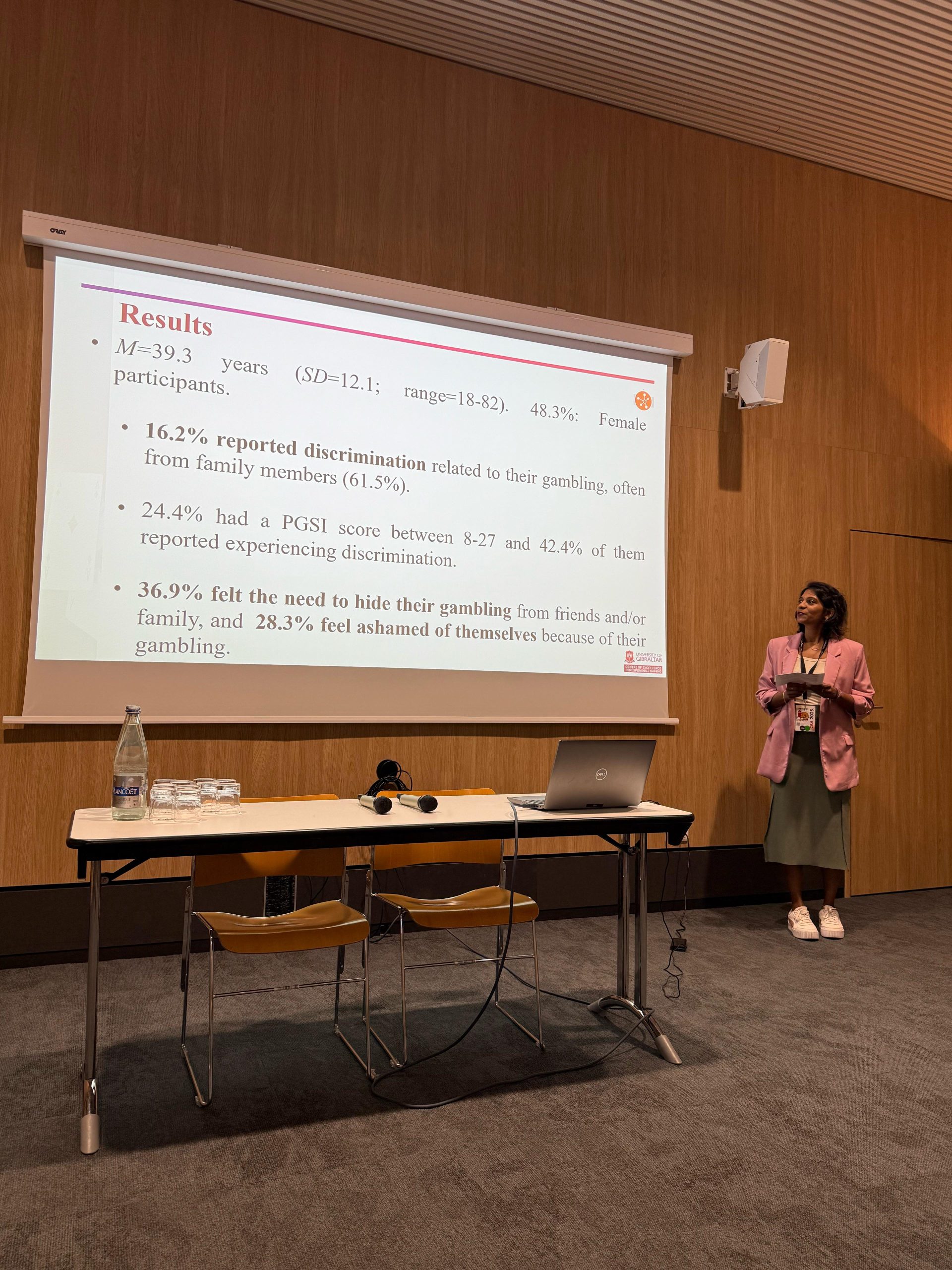
Exploring Perceptions and Experiences of Gambling-Related Stigma: Perspectives of People Who Gamble
Presenter: Yanisha Soborun
Yanisha Soborun presented research from a survey of 1,189 people who gamble, revealing how stigma and discrimination, often from family and friends, are linked to mental health issues, concealment, and regret. The study highlights the urgent need for public education to reduce gambling-related stigma.
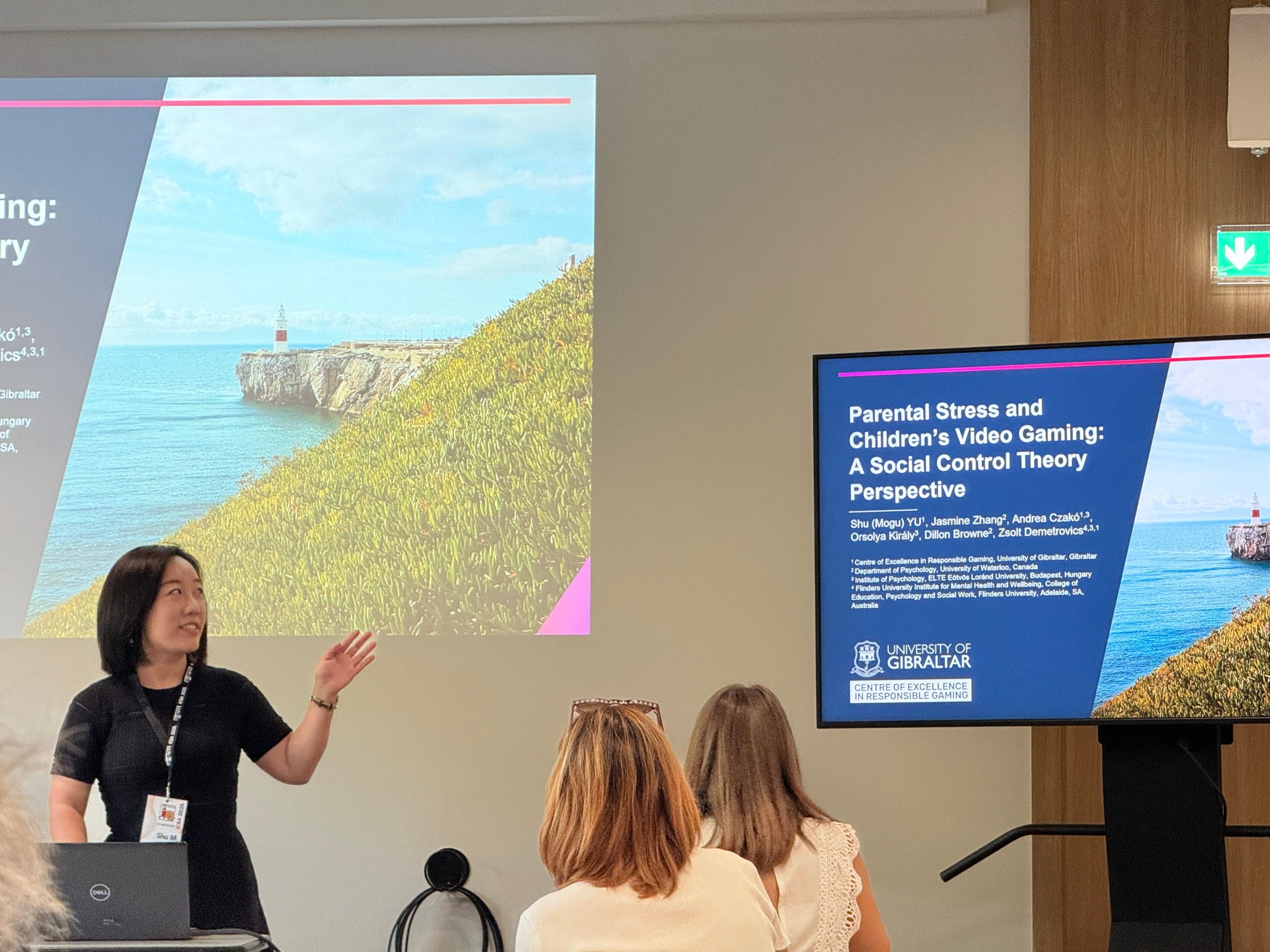
Parental Stress and Children’s Video Gaming: A Social Control Theory Perspective
Presenter: Dr Shu (Mogu) Yu
Dr Yu presented findings from a study of 1,111 Chinese parents, showing that both active and restrictive parental mediation reduce family conflict and parental stress related to children’s gaming. The research underscores the need to promote effective media parenting strategies.
Impulsivity and Compulsivity in Gaming Disorder and Compulsive Sexual Behavior Disorder in a Polish Adult Sample
Presenter: Dr Karol Lewczuk
Dr Lewczuk presented findings from a representative Polish adult sample (n=2,041), examining how impulsivity and compulsivity relate to gaming disorder and compulsive sexual behaviour disorder. The study’s insights have important implications for improving diagnosis and developing targeted treatments.
A New Measurement Tool to Assess Problems Related to the Use of Screen-Based Devices
Presenter: Dr Andrea Czakó
Dr Czakó introduced the Problematic Screen-Based Device Use Scale (ProbScreen), developed with a UK sample of 2,004 adults. Available in 25-item and 12-item forms, the ProbScreen measures impaired control, functional impairment, dependence/craving, and coping/escapism, providing an updated tool for researchers and clinicians to assess screen-use challenges.
An Exploration of Metacognition Within Adolescent Health and Risk-Taking Behaviour
Presenter: Julia Tibot
Julia Tibot presented data from a school-based survey of 2,472 adolescents in Gibraltar, examining how metacognitive beliefs influence risk-taking behaviours, including gaming, gambling, substance use, and problematic screen time. The findings will help inform youth health policies and local interventions.
We are incredibly proud of our team’s diverse and impactful contributions at the Paris workshop and ICBA 2025. Their research is shaping global conversations on behavioural addictions and youth mental health, driving policy change, and delivering solutions to some of today’s most pressing public health challenges.
16 October 2026 | NEWS

8 September 2026 | NEWS

11 August 2026 | NEWS

© Copyright 2026 University of Gibraltar. All rights reserved. Registered charity no. 273

