
A New Home for Ideas: the Kusuma Trust Conference Suite
16 October 2026 | NEWS
27 March 2026
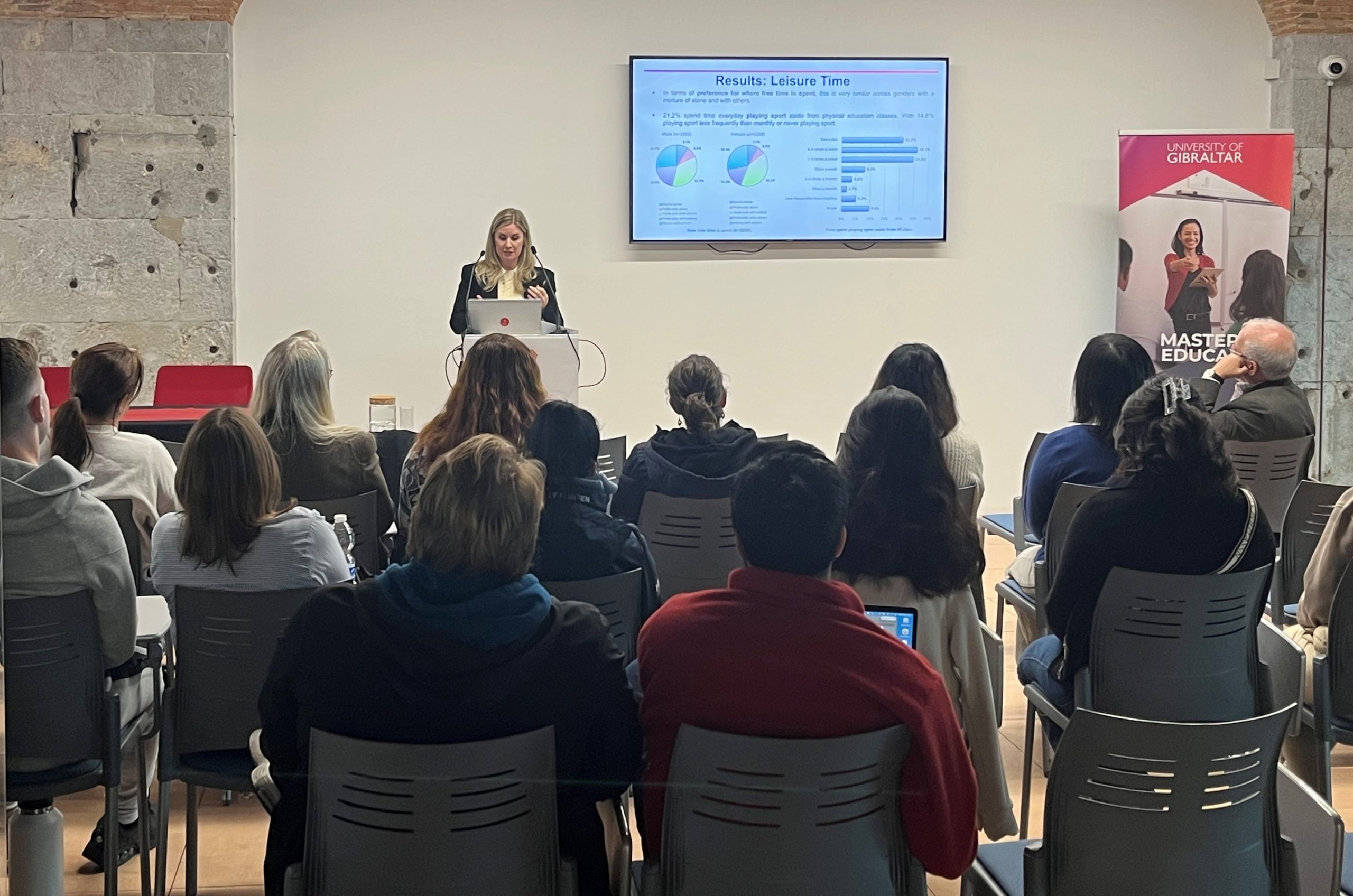
On 25th March, in her Public Research Lecture titled ‘Adolescent Risk-Taking Behaviours and Mental Health in Gibraltar’, Julia Tibot, a PhD researcher at our University, presented findings from her research exploring the escalating burden of adolescent mental health issues within the local context.
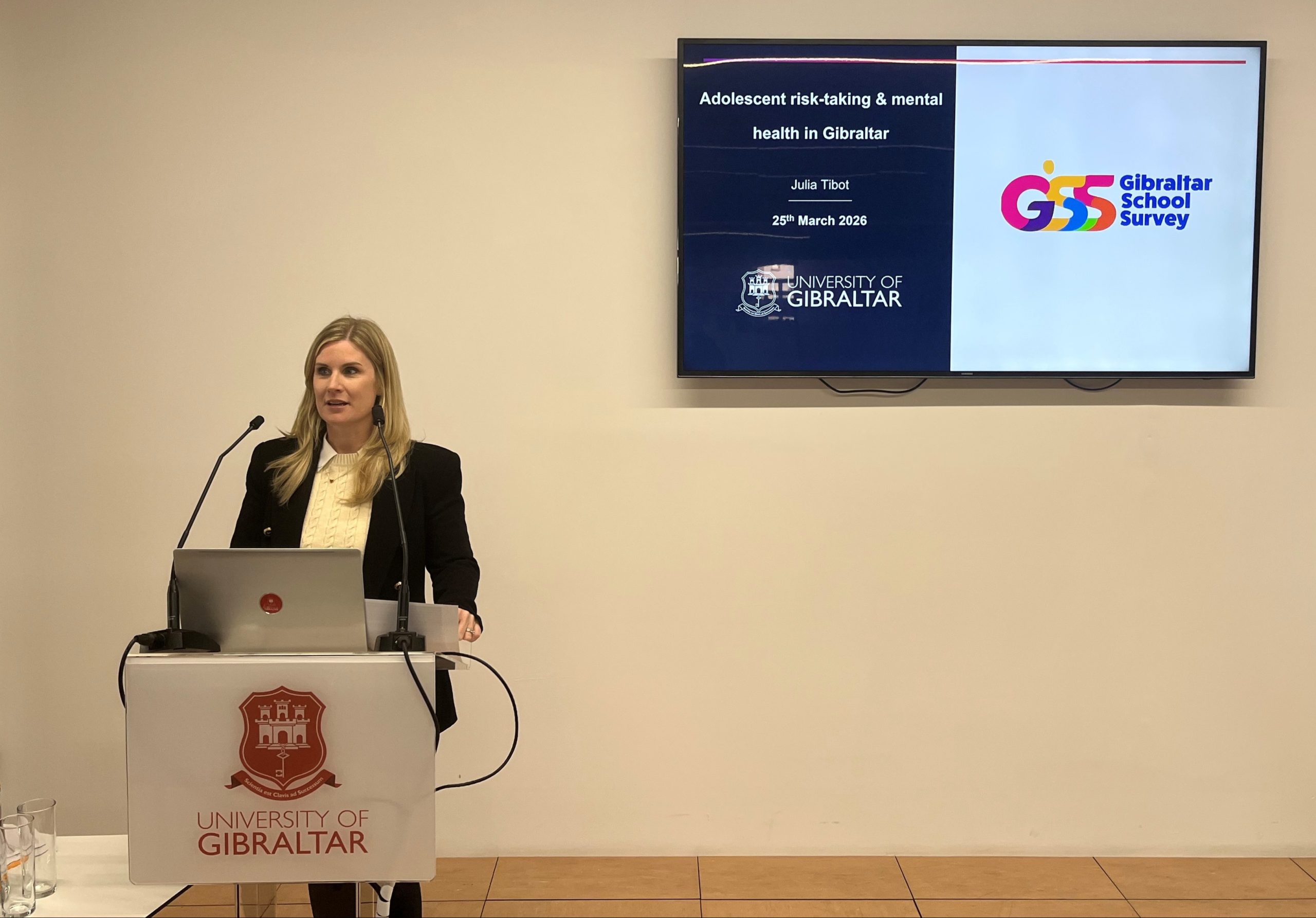
Drawing on data collected from nearly 2,500 adolescents across Years 7–13 in Gibraltar’s secondary schools, the lecture offered the first large-scale insight into youth health and behaviour in Gibraltar, providing a timely and important contribution to understanding the challenges facing young people today.
In opening, Julia situated adolescence as a critical developmental period shaped by significant biological, psychological, and social transitions, often associated with increased risk-taking and impulsivity. She emphasised the importance of cognitive control and metacognition in understanding these behaviours. She framed the study within a broader international evidence base while highlighting the lack of comparable data specific to Gibraltar, particularly in the context of a rapidly evolving digital landscape.
The research draws on established international frameworks, including the Health Behaviour in School-aged Children (HBSC) study and the European School Survey Project on Alcohol and Other Drugs (ESPAD), adapted to reflect Gibraltar’s unique context. This approach enabled a robust exploration of key areas, including mental wellbeing, school experience, substance use, lifestyle behaviours, and digital engagement.
The lecture explored what the evidence reveals about the mental health and behaviour of young people in Gibraltar today, and why the collection of locally derived data is essential for informing policy and intervention. Across these areas, a number of important patterns emerged, including a decline in wellbeing with age and an increase in feelings of loneliness.
Particular attention was given to adolescents’ relationship with technology, with the data indicating near-universal smartphone use and high levels of engagement with social media and digital platforms. While these tools offer clear benefits, the research also raises important questions regarding the impact of screen time, online behaviours, and potential overuse on mental wellbeing and risk-taking.
The findings also highlighted areas of strength, including the high-level participation of schools and, importantly, the students who took the time to contribute to the research. Julia acknowledged these contributions as instrumental in identifying opportunities to better support young people through targeted, evidence-based interventions, particularly in relation to mental health, school experience, and healthy lifestyles.
Julia emphasised that the research remains ongoing, with further analysis set to explore the interaction between different behavioural factors and to identify vulnerable groups more precisely. The overarching aim is to support evidence-based decision-making and contribute to policies that enhance the wellbeing and future outcomes of young people in Gibraltar.
The lecture provided an opportunity to reflect on the experiences of adolescents in a rapidly changing world and underscored the importance of continued research in shaping supportive environments for future generations.
16 October 2026 | NEWS

8 September 2026 | NEWS

11 August 2026 | NEWS

© Copyright 2026 University of Gibraltar. All rights reserved. Registered charity no. 273

