PhD
PhD by Research
Our PhD by research programme is based on independent study, guided by your assigned supervisors and support system. It typically [...]

Tyson L. Holmes is a PhD candidate at the University of Gibraltar’s Field Ecology Research Group, investigating how obligate aerial insectivores survive in high-risk environments. His project focuses on pallid swifts (Apus pallidus) and Eurasian crag martins (Ptyonoprogne rupestris) in Gibraltar, and forms part of a wider study on the Field Ecology and Movement of Pallid and Common Swifts at Gibraltar led by his supervisors, Professor Clive Finlayson and Dr Keith Bensusan. Tyson combines intensive fieldwork, including GPS tracking, infrared nest surveillance, mark-recapture, and long-term datasets on aerial arthropod availability and meteorological conditions to assess how these birds respond to fluctuating environmental pressures throughout the annual cycle. His doctoral work bridges behavioural and movement ecology, with insights into physiological condition in response to environmental variability, focusing on how birds with extreme aerial lifestyles respond to challenging environments where food availability is both unpredictable and meteorologically constrained.
Funders: HM Government of Gibraltar, Gibraltar National Museum, Friends of Gibraltar Heritage Society
Project lead: Mr Tyson Holmes
Supervisors: Professor Clive Finlayson (Primary Supervisor) and Dr Keith Bensusan (Secondary Supervisor).
Tyson’s research investigates how obligate aerial insectivores, a rare avian guild, cope with the challenges of life outside the tropics where food resources are ephemeral and weather conditions can be harsh. The study species are two of only sixteen globally that can complete their annual cycles outside the tropics, making them ideal case studies for understanding survival strategies at ecological margins.
By examining the daily and seasonal behaviours of two phylogenetically distinct species with comparable ecologies, this work contributes to a novel understanding of aerial insectivore ecology and may inform future assessments of how species exclusively dependent on airborne arthropods could be affected by climate change and increased urbanisation.
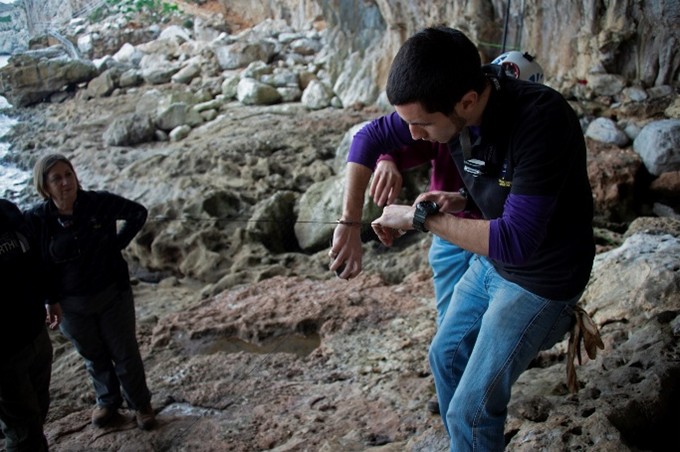
Tyson’s study combines observational, quantitative, and technological methods. Infrared cameras are used to remotely monitor breeding phenology in pallid swifts nesting in an urban setting, while micro-GPS loggers track their local foraging movements, which are then analysed in relation to meteorological conditions. Over a decade of continuous aerial arthropod sampling from light traps is analysed alongside meteorological datasets. Roost counts and biometric monitoring of Eurasian crag martins at Europe’s largest known winter roost site, combined with mark-recapture data, provide insights into population dynamics and physiological condition. Field sites include the Gibraltar National Museum and the Gorham’s Cave Complex.
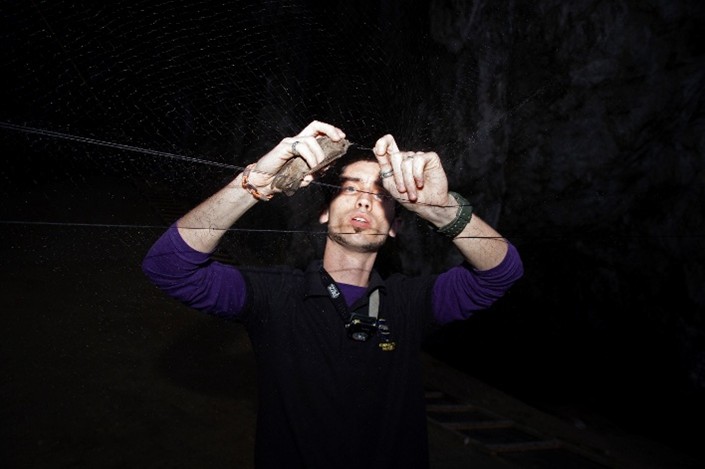
Tyson’s research highlights the ecological roles of swifts and crag martins in controlling aerial arthropod populations, with relevance for both natural and urban systems. By identifying how these species respond to environmental stressors, it provides support for evidence-based conservation in the context of urban expansion and climate change.
Public engagement efforts include educational talks, open nest monitoring via remote cameras, and outreach through museum-led activities, all aimed at enhancing community awareness of biodiversity and ecosystem health.
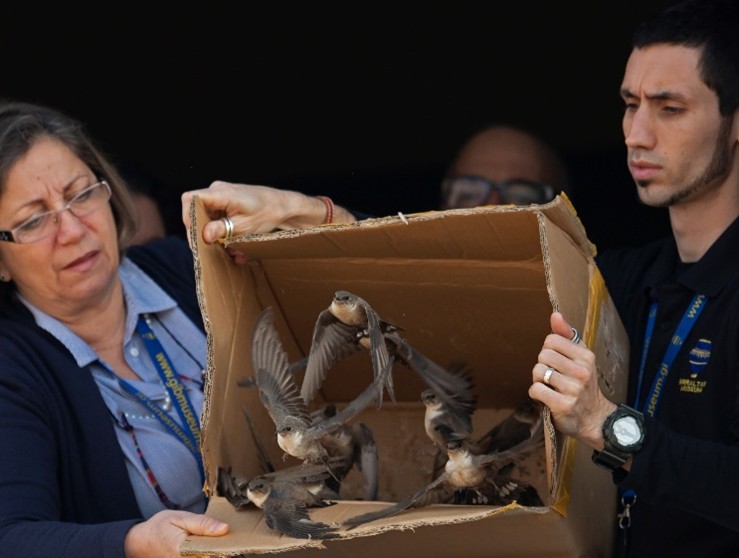
Tyson’s thesis establishes ecological baselines and behavioural benchmarks for obligate aerial insectivores in temperate latitudes, extending beyond the immediate study of swifts and crag martins. It contributes original data that informs conservation planning, including land management to support aerial foraging habitats and strategies to reduce the impact of development on urban nesting birds.
The integration of long-term insect sampling, weather data, and bird tracking informs biometeorological models and may help predict impacts of climate change on food availability. Findings have implications for aerial ecosystem conservation, policy on urban biodiversity policy, and future research on the survival strategies of highly mobile insectivores under global environmental change.
Below is a selection of peer-reviewed publications and conference presentations relating to the project:
Peer-reviewed articles:
Finlayson S., Holmes T.L., Finlayson G., Guillem R., Perez C., Bensusan K., et al. (2021) Birds with multiple homes. The annual cycle of the pallid swift (Apus pallidus brehmorum). PLoS ONE 16(11): e0259656. https://doi.org/10.1371/journal.pone.0259656
Bensusan, K., Holmes, T.L., Perez, C. et al. Crag Martin neontology complements taphonomy at the Gorham’s Cave Complex. Sci Rep 11, 16851 (2021). https://doi.org/10.1038/s41598-021-95974-9
Conference papers (as speaker):
Holmes, T.L. ‘Life on the Edge: Researching avian aerial insectivores in Gibraltar. (Dec 2023) Gibraltar National Museum Christmas Seminar: Natural History of Gibraltar. Gibraltar
Holmes, T.L. ‘Life on the Edge: Avian Aerial Insectivore Strategies in High-Risk Environments’. (Jun 2023) Research That Benefits Gibraltar Conference. Gibraltar
Holmes, T.L., et al. ‘Birds with multiple homes. The annual cycle of the Pallid swift (Apus pallidus brehmorum)’. (May 2022) 6th International Swift Conference. Segovia, Spain
Bensusan, K. & Holmes, T.L. ‘Taphonomy Yesterday and Tomorrow: Crag Martins in Gibraltar from the Pleistocene to the Present’. (Sep 2021) 25th Calpe Conference – Iberian Neanderthals. Gibraltar
Holmes, T.L. ‘Behavioural Ecology of Avian Aerial Insectivores in Gibraltar: A PhD thesis in progress’ (Oct 2020) Friends of Gibraltar Heritage Society Seminar. Gibraltar
Conference papers (as co-speaker):
Finlayson, G., Finlayson, S., Giles Guzmán, F., Holmes, T.L. & Finlayson, C. ‘The Gorham’s Cave Complex: An ecological overview of a World Heritage Site’ (Oct 2020) 24th Calpe Conference – Natural History of Gibraltar: Past, Present and Future. Gibraltar

© Copyright 2026 University of Gibraltar. All rights reserved. Registered charity no. 273

