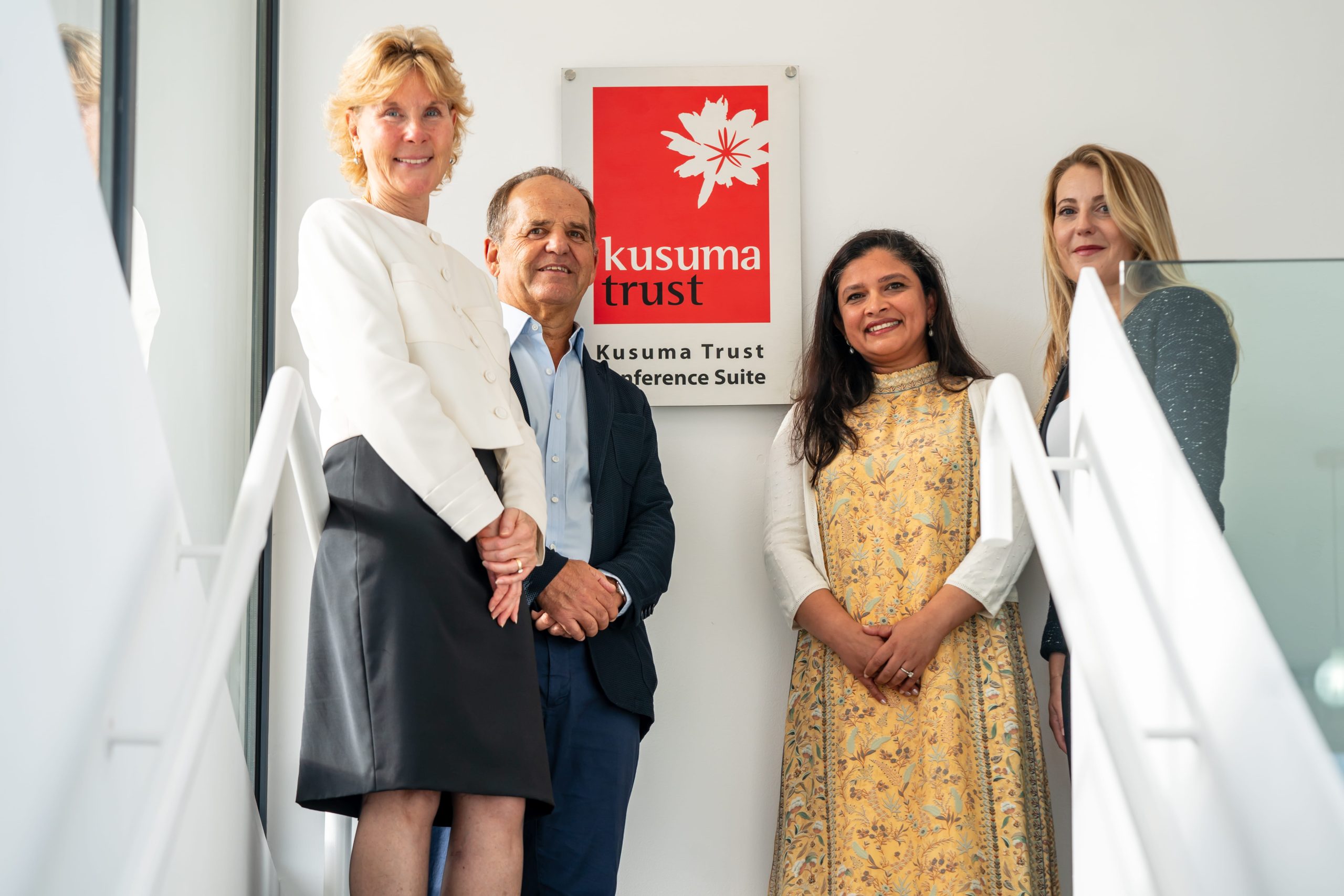
A New Home for Ideas: the Kusuma Trust Conference Suite
16 October 2026 | NEWS
23 January 2026
In her Public Research Lecture titled Language Shift and Code-Switching in Gibraltar: A Case Study of Young Adults, which took place on 21st January, Dr Marta Rodríguez García explored how Gibraltar’s unique linguistic landscape has evolved and how young adults navigate everyday multilingual practices.

Drawing on sociolinguistic research and participant-based evidence, Marta positioned Gibraltar as a site of intense cultural and linguistic contact, where English, Spanish, and Llanito coexist and interact. She traced the historical evolution of language use in Gibraltar, from a pre-Second World War context characterised by British English and Andalusian Spanish, through later developments in the 1970s, to a contemporary landscape increasingly oriented around British English, Gibraltarian English, Spanish, and Llanito. While the majority of the population identify English as their main language, the lecture highlighted that among young adults, Llanito continues to play a prominent role in informal communication.
A key focus of the lecture was code-switching, defined as the alternation between two or more languages within a single discourse. Marta illustrated how bilingual speech often blurs the boundaries between languages, challenging traditional linguistic distinctions between language systems and their everyday use. Rather than viewing multilingualism as compartmentalised, the lecture showed how speakers fluidly draw on their full linguistic repertoire in response to context, audience, and purpose.
The findings presented were based on focus group research with participants aged between 16 and 35, examining language use across different domains, including the home, friendships, and public spaces. Through concrete examples of everyday interaction, the lecture illustrated how English and Llanito dominate these settings, functioning as important markers of identity, belonging, and social positioning.
The lecture concluded by reflecting on the broader significance of multilingual practices in Gibraltar. Bilingual and multilingual repertoires were shown to enrich cultural identity, support cognitive and communicative development, and contribute to social interactions. Marta emphasised that fostering pride in bilingualism and in local linguistic varieties such as Llanito is essential in countering linguistic insecurity and sustaining linguistic heritage.
Overall, the lecture highlighted that Gibraltar’s linguistic environment offers valuable insights into language contact, community, and change, demonstrating how everyday language practices illuminate wider questions of identity and continuity in a rapidly evolving world.

16 October 2026 | NEWS

8 September 2026 | NEWS

11 August 2026 | NEWS

© Copyright 2026 University of Gibraltar. All rights reserved. Registered charity no. 273

