A New Home for Ideas: the Kusuma Trust Conference Suite
16 October 2026 | NEWS
27 July 2026
Adjunct Researcher Dr Ryan Asquez has shared his work across a range of international academic and public platforms, contributing to the University’s research in History and Culture.
In September 2025, Dr Asquez brought his research to a wider audience through articles in the Gibraltar Chronicle and The Corner Stone on the restoration works at St Mary the Crowned Cathedral. The pieces highlighted findings uncovered in the roof during repairs and explained the cathedral’s evolution, linking its medieval origins with later developments and structural changes.
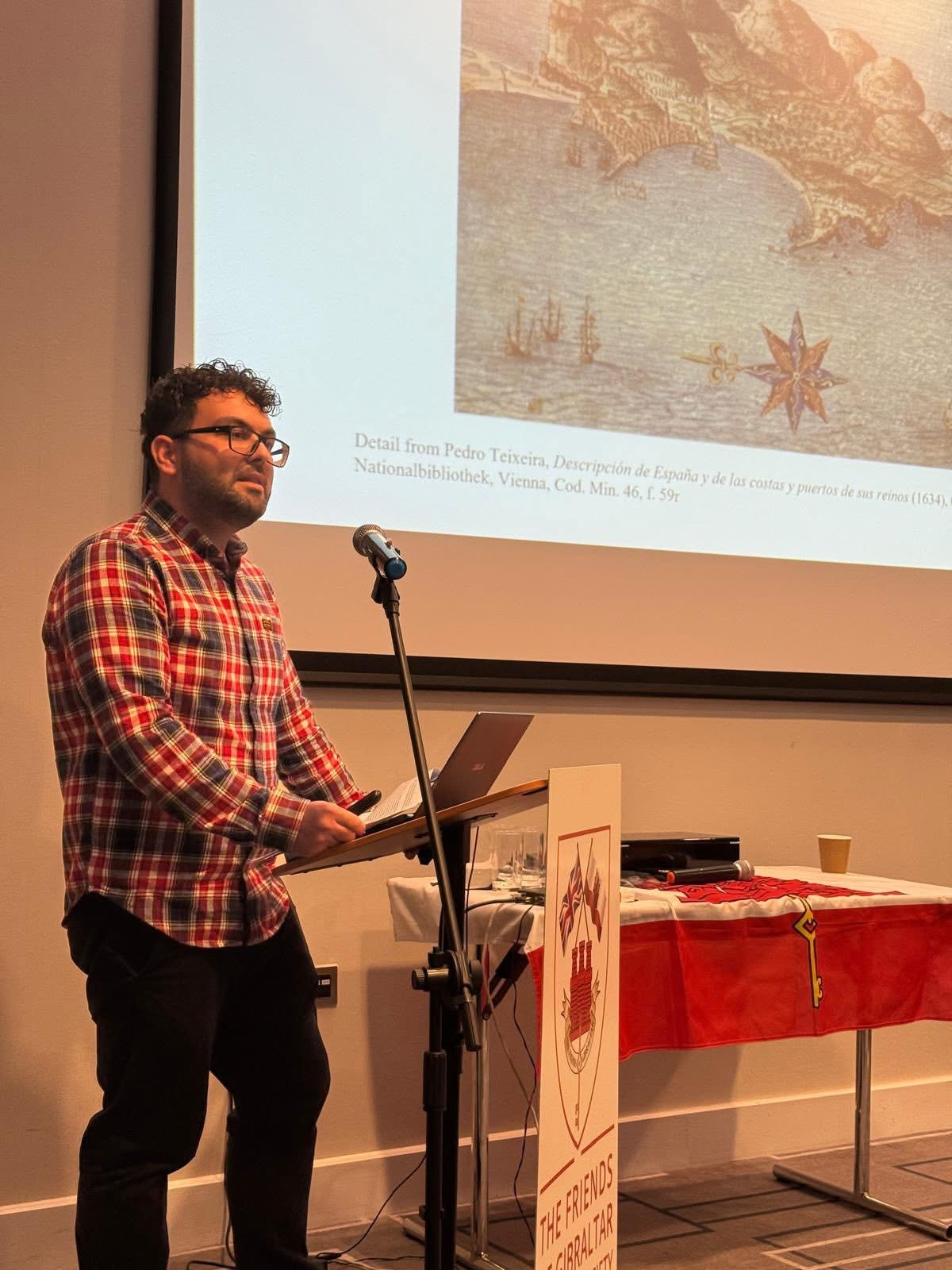
He has also contributed to academic discussions through conference participation. In October 2025, he presented a paper at the Friends of Gibraltar Heritage Society seminar in the UK titled ‘Death, Tragedy and the Landscape in Gibraltar’s Burial Registers, 1684–1704’. This was followed by a presentation at the Medieval and Early Modern research network (MERM) in March 2026.
In April 2026, Dr Asquez took part in the international conference ‘Borders, Boundaries and Barriers: Real and Imagined in the Middle Ages’ at the University of Oxford. His poster presentation, ‘“To Distance Ourselves”: The Suffering Christ as a Boundary of Community in the Late Medieval Mass’, explored representations of the suffering Christ between c.1450 and c.1550.
His research was also featured at the Gibraltar International Conference, held at the University of Cádiz in May 2026, where he presented ‘Por ser Forastero: Belonging and Otherness in the Church Registers of Gibraltar, 1683–1704’. This work examines themes of identity, belonging and exclusion in early modern Gibraltar through ecclesiastical records.
Dr Asquez’s work demonstrates the value of combining archival research, interdisciplinary analysis and public engagement to deepen understanding of Gibraltar’s cultural heritage. Through these outputs, he continues to strengthen the University’s research profile and visibility in historical studies.


16 October 2026 | NEWS

8 September 2026 | NEWS

11 August 2026 | NEWS

© Copyright 2026 University of Gibraltar. All rights reserved. Registered charity no. 273

